
| Rate type | Amount |
|---|---|
| Adult and minor employees | $7.25 per hour |
| Tipped employee cash wage | $2.33 per hour |
| Maximum tip credit | $4.92 per hour |
| Opportunity employee (under 20, first 90 days) | $5.90 per hour |
| Tipped opportunity employee | $2.13 per hour |
| Golf caddies | $5.90 for 9 holes, $10.50 for 18 holes |
| Overtime | 1.5x the regular rate after 40 hours in a workweek |
Source: Wisconsin Department of Workforce Development (DWD), Minimum Wage. Tip credit and overtime from the U.S. Department of Labor.
DWD lists its current rates as of July 24, 2009, the date the federal minimum reached $7.25, so the state and federal floors match. No increase is scheduled for January 1, 2027 on the official pages. Watch DWD for any change.
An opportunity employee is a worker under 20 who has been with your business for 90 or fewer consecutive calendar days. You may pay $5.90 an hour during that window. When the 90 days end, or the worker turns 20, whichever comes first, pay must rise to at least $7.25. If the worker earns tips, the cash floor during that window is $2.13.
Hiring teens? Check the hour and job limits in our guide to the minimum age to work.
You may pay $2.33 an hour in cash if tips make up the rest. DWD explains that if the cash wage plus tips does not average at least $7.25 an hour over the pay period, the employer must make up the difference. Run the numbers with the tip credit calculator and review the tip pooling rules.
| Arrangement | Weekly minimum (adult or minor) |
|---|---|
| No board or lodging | $350 |
| Board only | $265 |
| Board and lodging | $210 |
Non-exempt employees earn time and a half after 40 hours in a workweek. Review who qualifies as exempt in the FLSA overtime rules.
For tipped staff, overtime is based on the full $7.25 minimum, not the $2.33 cash wage.
A full-time employee at 40 hours a week for 52 weeks works 2,080 hours. At $7.25, that is $15,080 a year before taxes. An opportunity employee at $5.90 earns $236.00 for a 40-hour week, and must move to $7.25 once the 90-day window closes or they turn 20. New to the term? Our minimum wage glossary entry explains how state and federal floors interact: when both apply, the employee gets the higher rate.
| State | Basic minimum wage (Nov. 2026) |
|---|---|
| Wisconsin | $7.25 |
| Illinois | $15.00 |
| Michigan | $13.73 ($15.00 scheduled January 1, 2027) |
| Minnesota | $11.41 |
| Iowa | $7.25 |
Figures from the U.S. Department of Labor state table, updated November 5, 2026. Employers near the Illinois or Michigan border often pay above $7.25 to compete for staff.
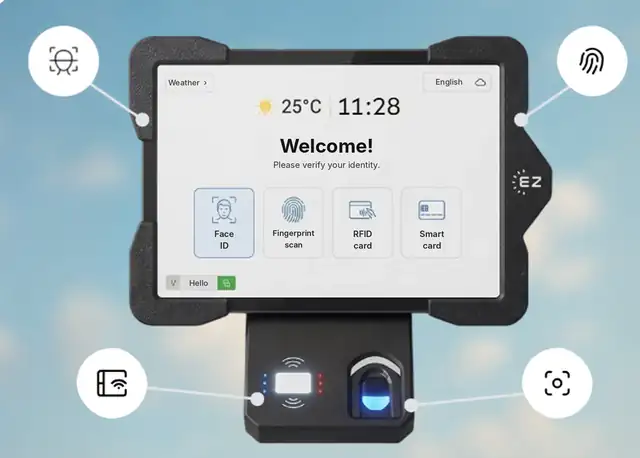
EZTime’s GPS time clock app captures punches by phone, kiosk, NFC tap or face recognition, flags overtime before it happens and exports payroll-ready hours. Plan shifts with shift scheduling and let staff swap shifts and request time off in one app.
$7.25 per hour for adults and minors, according to the Wisconsin Department of Workforce Development.
$2.33 per hour in cash, or $2.13 for a tipped opportunity employee. Tips plus wages must average at least $7.25 over the pay period.
$5.90 per hour for workers under 20 during their first 90 consecutive calendar days with an employer.
Keep Wisconsin hours and wages in line. Start your 14-day trial or book a demo.
Updated November 2026. Rates verified against official state sources on November 14, 2026. General information only; not legal advice.