
Dear [Hiring Manager’s name],
I am pleased to recommend [Employee name] for the [position or program] at [organization]. As [your title] at [company], I supervised [Employee] from [start date] to [end date / present], where [he/she/they] worked as a [job title].
In this role, [Employee] was responsible for [two or three key duties]. [He/She/They] stood out for [strength 1]. For example, [specific example with a result]. [Employee] also [strength 2], such as when [example].
Beyond the work itself, [Employee] is [teamwork or character trait], and coworkers [how others relied on them].
I recommend [Employee] without reservation. Please contact me at [phone] or [email] if you would like more detail.
Sincerely,
[Name, title, company]
Dear Ms. Patel,
I am glad to recommend Marcus Green for the shift supervisor position at your store. I managed Marcus for two years at our downtown location, where he worked as a sales associate and cashier.
Marcus was one of our most dependable team members. He picked up open shifts during the holiday season, opened the store on weekends and kept his cash drawer accurate. When we changed our returns process, he learned it first and trained four newer associates on it.
Customers asked for him by name, and coworkers went to him with questions when I was off the floor. He is calm with upset customers and fair with coworkers.
I believe Marcus is ready to lead a team, and I recommend him highly. You can reach me at the number below.
Sincerely, Store Manager
To the Operations Hiring Committee,
I recommend Ana Lopez for the second-shift supervisor role. Ana has worked on my team for three years, the last year as a lead picker.
Ana sets up the shift huddle, assigns pick zones and checks that new hires follow safety procedures before they work alone. She suggested a simple change to how we stage outbound orders that cut confusion at the dock, and the team adopted it across both shifts.
She is steady under pressure and treats every coworker with respect. I am confident she will succeed as a supervisor.
Regards, Warehouse Manager
Dear Admissions Committee,
I am writing to recommend Priya Shah for your nursing program. Priya worked as a caregiver with our home care agency for 18 months before leaving to continue her education.
Clients and families trusted her. She documented visits carefully, arrived on time for early morning shifts and always told us right away when a client’s needs changed. Two families asked that she stay on their schedule permanently.
Priya combines kindness with attention to detail, and I recommend her for your program.
Sincerely, Care Coordinator
| Do | Don’t |
|---|---|
| Use specific examples and results | Use vague praise like “great worker” |
| Match strengths to the new role | Repeat the resume line by line |
| Confirm dates and title from records | Guess or round up tenure |
| Keep it to one page | Mention age, health, family, religion or other personal traits |
| Say no politely if you cannot be positive | Exaggerate or write something you do not believe |
Many employers limit references to confirming dates of employment and job title, or route all requests through HR. Check your company policy before writing on company letterhead. Keep every statement truthful and based on records, since misleading statements in either direction can create legal risk. State rules differ, so ask HR or counsel when in doubt.
A recommendation letter is different from an employment verification letter, which only confirms facts, and from a reference letter, which is often more general. If you are on the other side of the process, use these reference check questions.
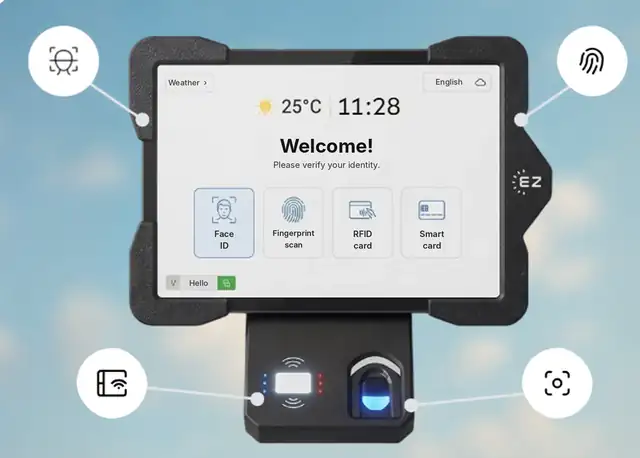
Accurate records make letters easier: EZTime’s time clock keeps hire dates, hours and attendance history so you can confirm the facts before you write.
Who you are and how you know the employee, their role and dates, two or three strengths with specific examples, and a clear closing endorsement with your contact details.
One page is enough: usually three to five short paragraphs.
Yes. If you cannot write a positive, truthful letter, or company policy limits references, politely decline or offer to confirm dates and title only.
Keep every employee record in one place. Start your 14-day trial or book a demo.
Updated November 2026. General information only; not legal advice.