
| Rate type | Amount |
|---|---|
| Standard minimum wage | $7.25 per hour |
| Tipped employee cash wage | $3.35 per hour |
| Maximum tip credit | $3.90 per hour |
| Who counts as tipped | More than $30 a month in tips |
| New hires under 20 (first 90 consecutive days) | $4.25 per hour |
| Overtime | 1.5x after 40 hours in a workweek (federal rule) |
Source: Idaho Department of Labor, labor law FAQ, Idaho Code Section 44-1502 and the U.S. Department of Labor tipped wage table.
Idaho Code Section 44-1502 sets the minimum at $7.25 and says it must conform to and track the federal minimum wage. Because the federal rate has not changed since July 24, 2009, Idaho’s has not either. No increase is scheduled for January 1, 2027 on the official pages. If Congress raises the federal rate, Idaho’s would follow.
Want the bigger debate? Read the pros and cons of raising the minimum wage.
You may pay a new employee under 20 years old $4.25 an hour, but only for the first 90 consecutive calendar days of employment. After that, or once the worker turns 20, pay must be at least $7.25. Track the start date for every young hire so the rate ends on time. Our guide to the minimum age to work covers hour limits for teens.
An employee who regularly gets more than $30 a month in tips can be paid $3.35 an hour in cash. If tips plus the cash wage do not reach $7.25 for each hour worked, the employer must make up the difference. Test a week with the tip credit calculator.
Idaho follows the federal FLSA: time and a half for all hours worked over 40 in a workweek, unless the employee is exempt. Each workweek stands alone. The Idaho Department of Labor gives this example: an employee who works 48 hours one week and 22 the next is owed 8 overtime hours for the first week. You cannot average the two weeks. See the FLSA overtime rules.
For tipped staff, overtime is based on the full $7.25 minimum, not the $3.35 cash wage.
| State | Basic minimum wage (Nov. 2026) |
|---|---|
| Idaho | $7.25 |
| Washington | $17.13 |
| Oregon | $15.55 (standard rate) |
| Nevada | $12.00 |
| Montana | $10.85 (larger businesses) |
| Utah | $7.25 |
Figures from the U.S. Department of Labor state table, updated November 5, 2026. Employers near the Washington border often pay more to keep staff.
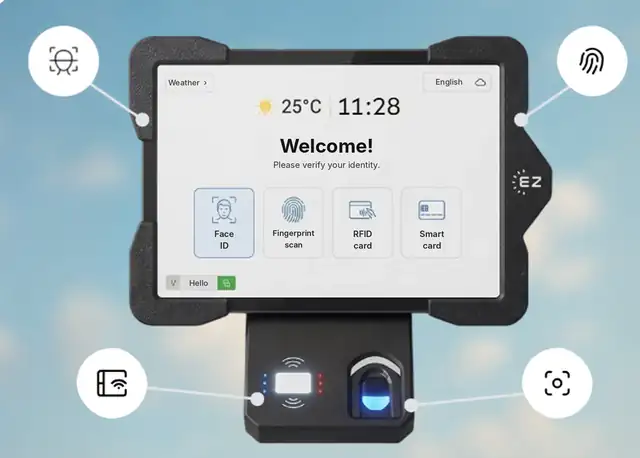
EZTime’s GPS time clock app captures punches by phone, kiosk or NFC tap, sends overtime alerts and builds payroll-ready exports. Plan shifts, swaps and time-off requests with shift scheduling.
$7.25 per hour, according to the Idaho Department of Labor. State law ties it to the federal minimum wage.
$3.35 per hour in cash for employees who get more than $30 a month in tips. Wages plus tips must reach $7.25 an hour.
Yes. New hires under 20 can be paid $4.25 per hour for their first 90 consecutive calendar days of employment.
Track every Idaho shift with ease. Start your 14-day trial or book a demo.
Updated November 2026. Rates verified against official state sources on November 14, 2026. General information only; not legal advice.