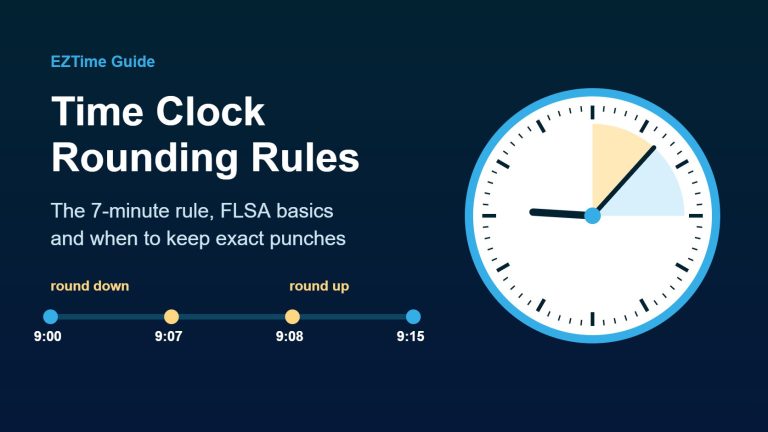
Time Clock Rounding Rules: The 7-Minute Rule Explained for US Employers
How time clock rounding works under the FLSA, what the 7-minute rule means, where rounding policies go wrong, and why many US employers now pay from exact punches.
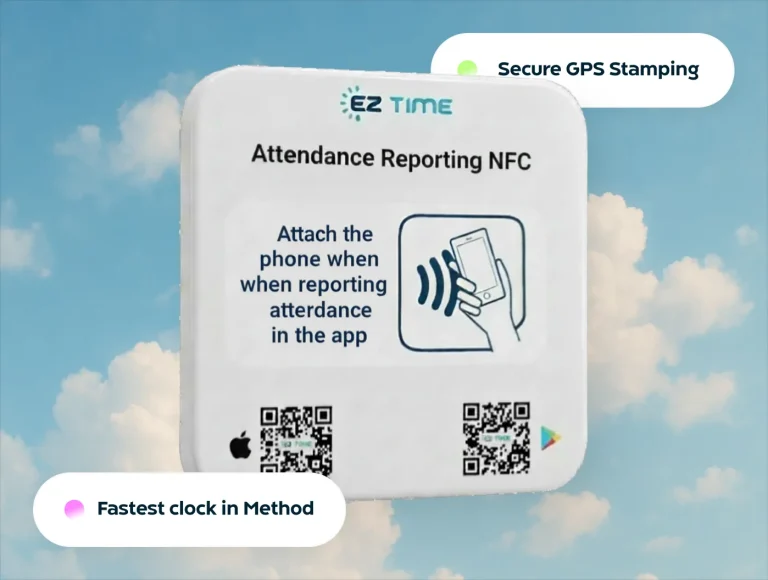
Choosing and rolling out time clocks: mobile apps, NFC, biometric devices, and kiosks.

How time clock rounding works under the FLSA, what the 7-minute rule means, where rounding policies go wrong, and why many US employers now pay from exact punches.

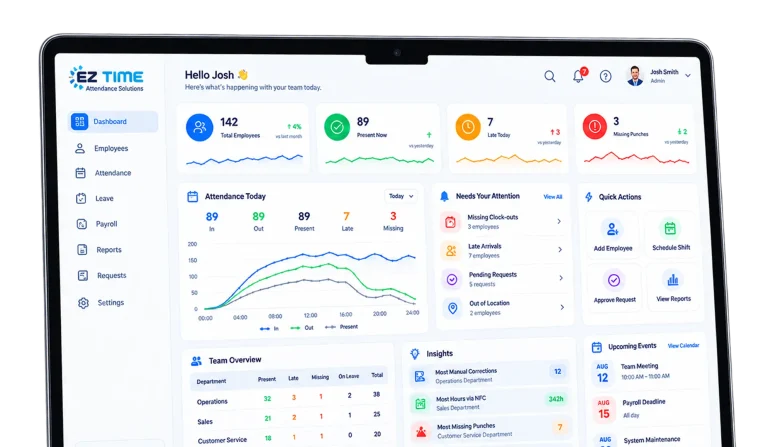
NFC time tracking lets an employee clock in or out by bringing a compatible smartphone close to a tag installed at a

Employee clock-in methods are the ways workers record the start and end of a work period. Common options include a mobile time

Learn how NFC time tracking works: employees tap a phone to a tag at the work site, hours sync to the cloud, and managers see time by site or project.

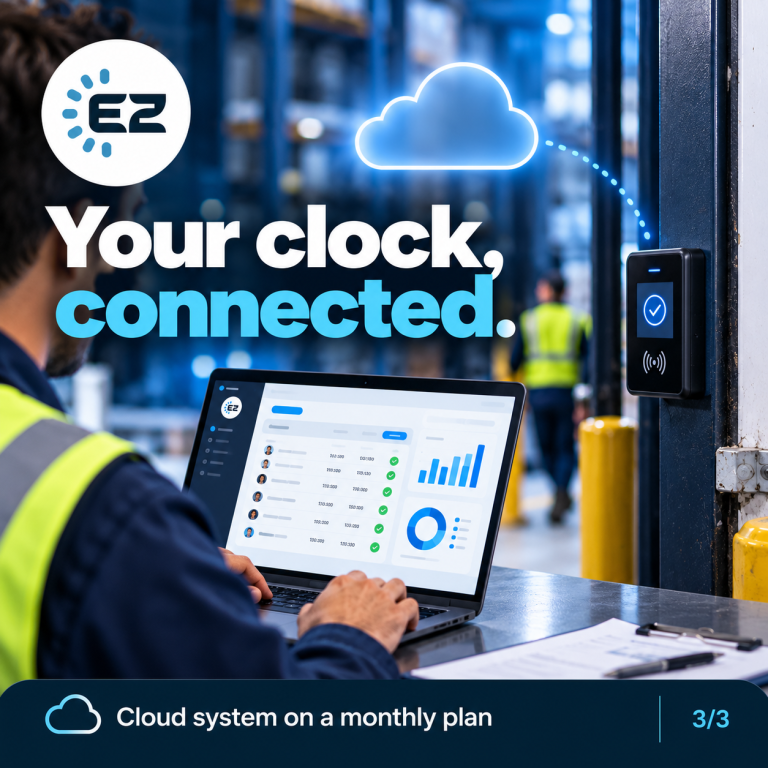
See how the EZTime NFC time clock works: employees tap a phone to a tag, hours sync to the cloud, and managers track time by site and project, even with weak GPS.

How a mobile time clock app helps field teams clock in from anywhere, assign hours to sites and projects, use GPS responsibly, and fix missed punches fast.

Compare mobile app, NFC, physical, and biometric time clocks. Learn which fits your workforce, what it really costs, and what to test before you buy.

What a time clock app does for your business, how GPS verification and approved clock-in locations keep punches accurate, and how to roll it out responsibly.

A step-by-step plan for rolling out a time clock: communicate, train, enforce, run a pilot, and five proven tips for building the clock-in habit.

Why a time clock pays off: accurate records, a simple savings formula, what a modern attendance system includes, and how to choose the right clock for your team.